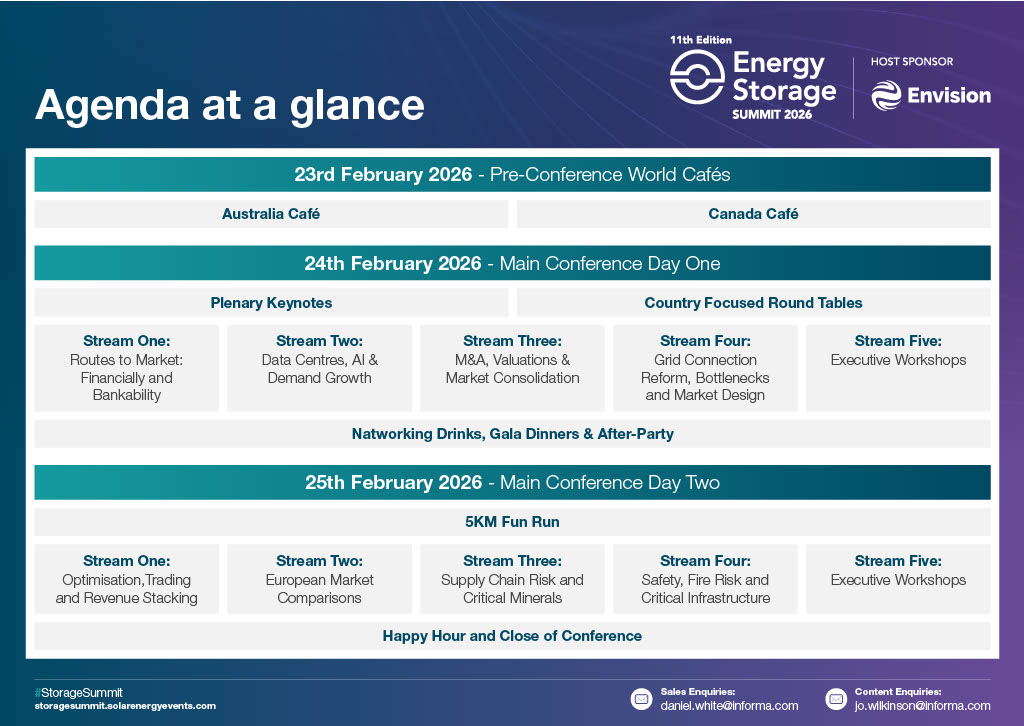
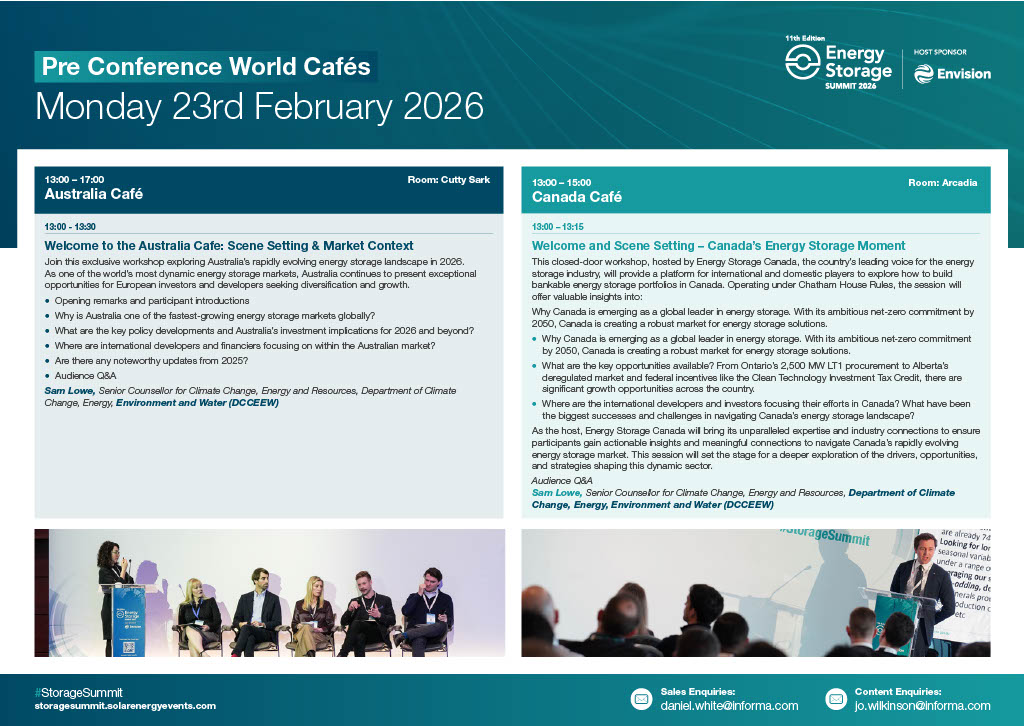
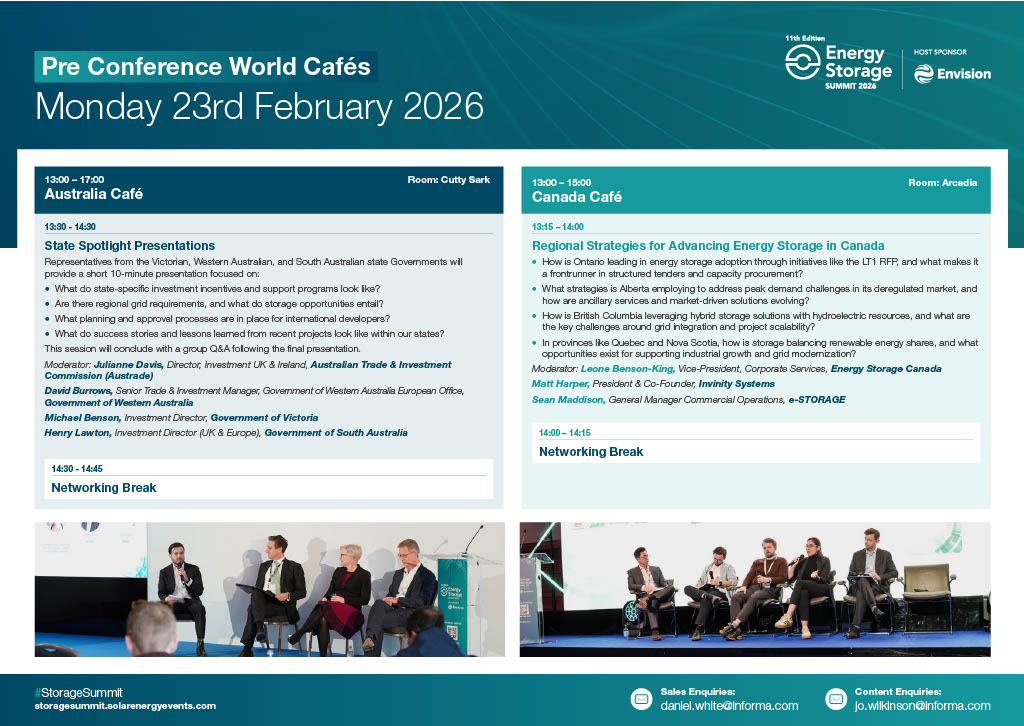
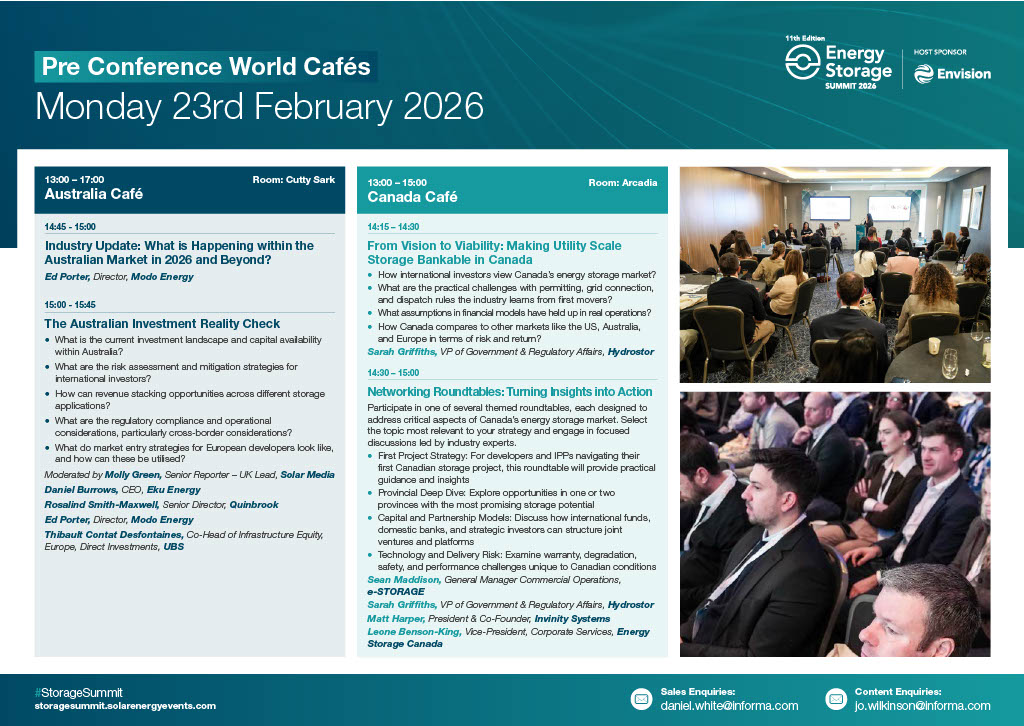
2026 Agenda
Interested in speaking on a panel, or giving a presentation?
Get in touch with the Energy Storage Summit team to find out how you can get involved.
Interested in speaking on a panel, or giving a presentation?
Get in touch with the Energy Storage Summit team to find out how you can get involved.
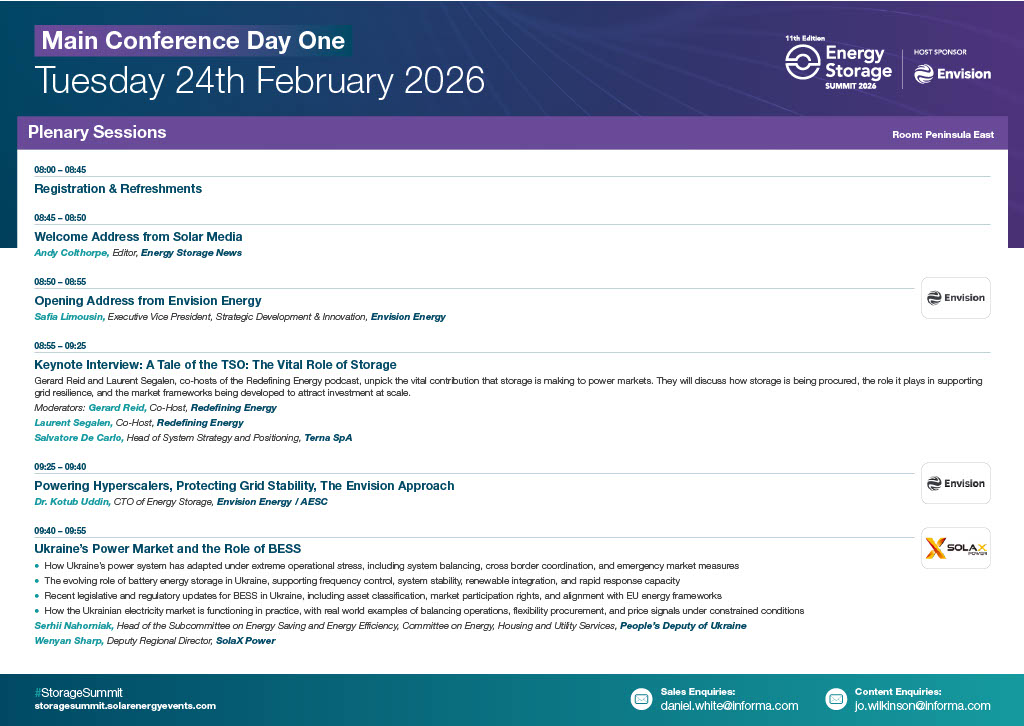
Gerard Reid and Laurent Segalen, co-hosts of the Redefining Energy podcast, interview two leading European TSOs whose markets are shaping the global approach to BESS. They will discuss how storage is being procured, the role it plays in supporting grid resilience, and the market frameworks being developed to attract investment at scale.
Chatham House Rules
Hyperscale demand is rising at pace, and cloud operators need storage that can handle large, continuous loads, support clean-power procurement, and strengthen site resilience as their footprints grow. This keynote sets out what the cloud sector now expects from storage: the scale required, the speed at which solutions must be deployed, the commercial models gaining traction, and how storage enables reliable low-carbon power at hyperscale.
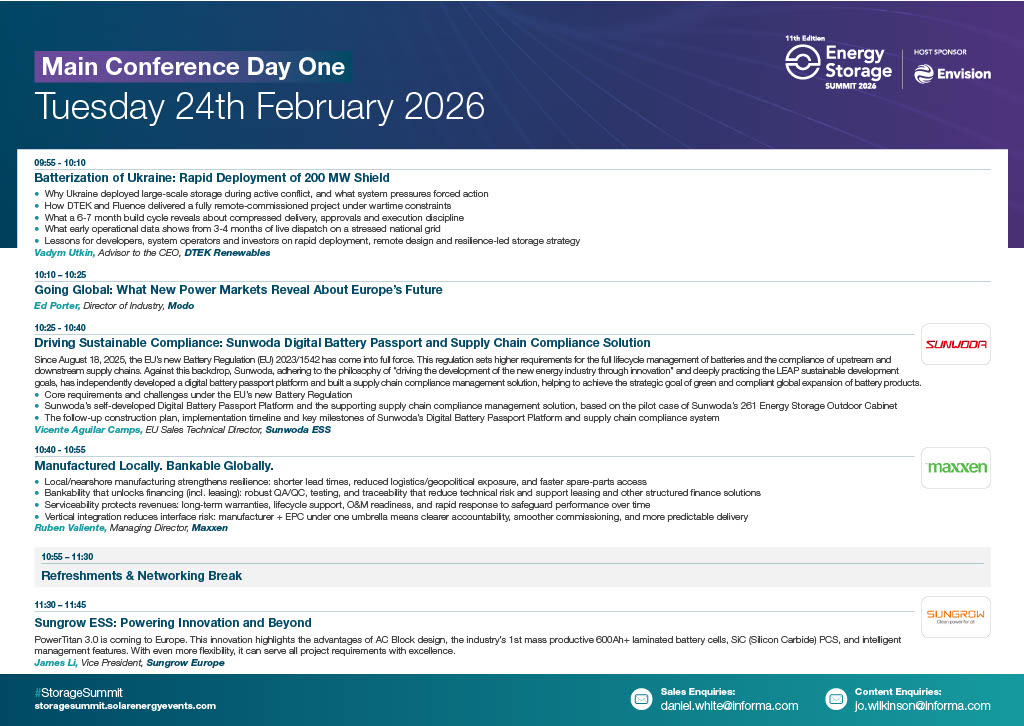
PowerTitan 3.0 is coming to Europe. This innovation highlights the advantages of AC Block design, the industry’s 1st mass productive 600Ah+ laminated battery cells, SiC (Silicon Carbide) PCS, and intelligent management features. With even more flexibility, it can serve all project requirements with excellence.

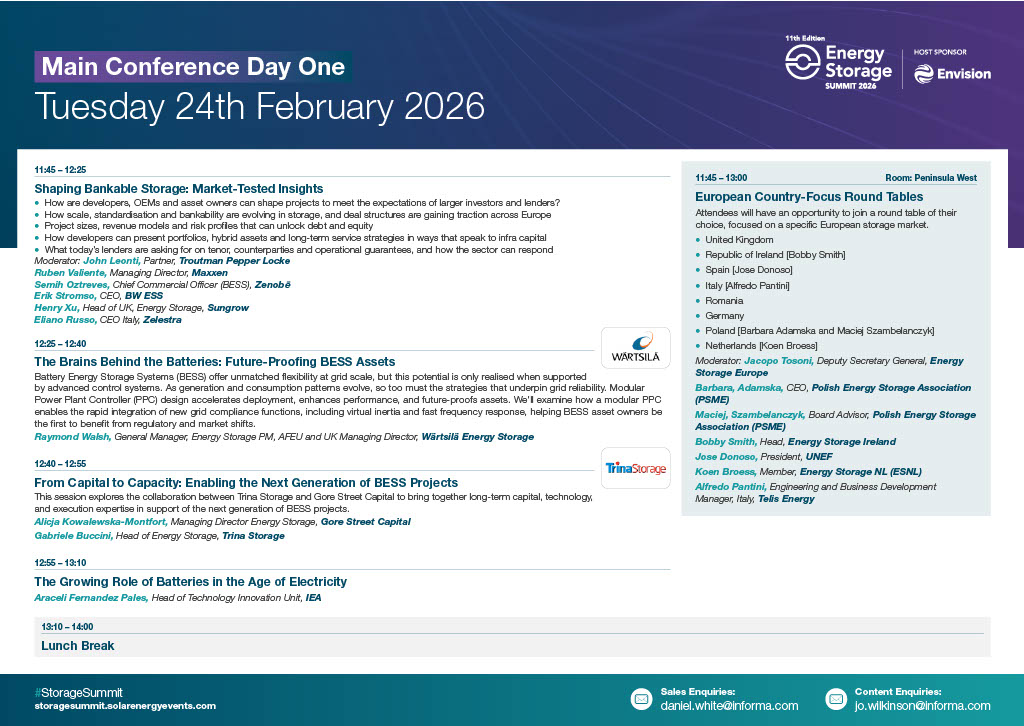
• How are developers, OEMs and asset owners can shaping projects to meet the expectations of larger investors and lenders?
• How scale, standardisation and bankability are evolving in storage, and deal structures are gaining traction across Europe
• Project sizes, revenue models and risk profiles that can unlock debt and equity
• How developers can present portfolios, hybrid assets and long-term service strategies in ways that speak to infra capital
• What today’s lenders are asking for on tenor, counterparties and operational guarantees, and how the sector can respond


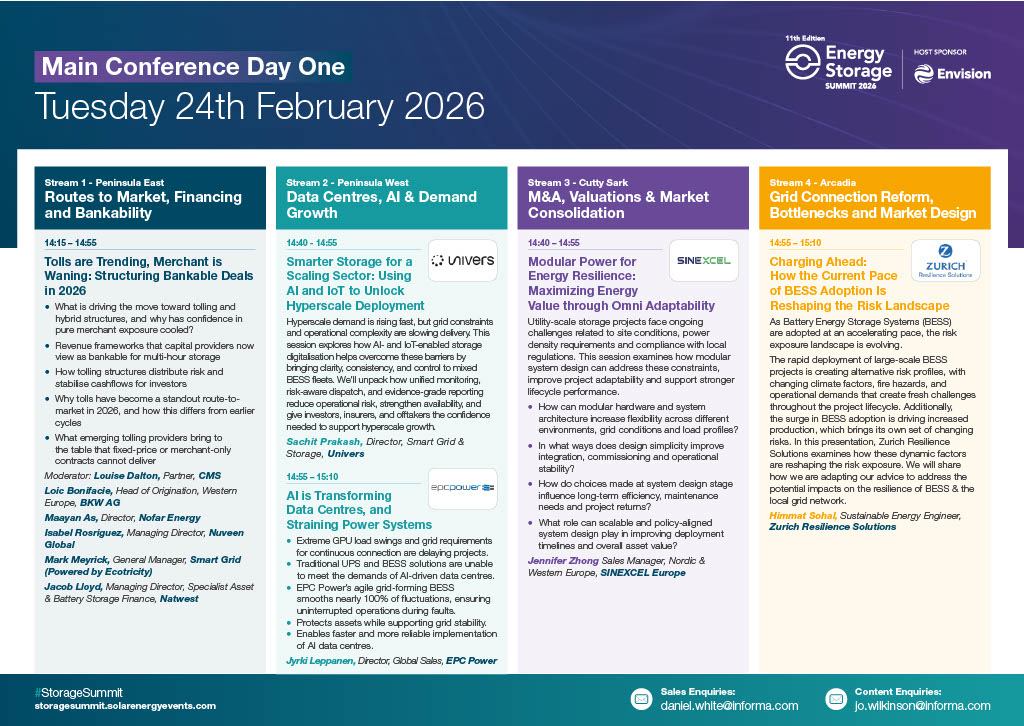
Hyperscale demand is rising fast, but grid constraints and operational complexity are slowing delivery. This session explores how AI- and IoT-enabled storage digitalisation helps overcome these barriers by bringing clarity, consistency, and control to mixed BESS fleets. We’ll unpack how unified monitoring, risk-aware dispatch, and evidence-grade reporting reduce operational risk, strengthen availability, and give investors, insurers, and offtakers the confidence needed to support hyperscale growth.
![]()
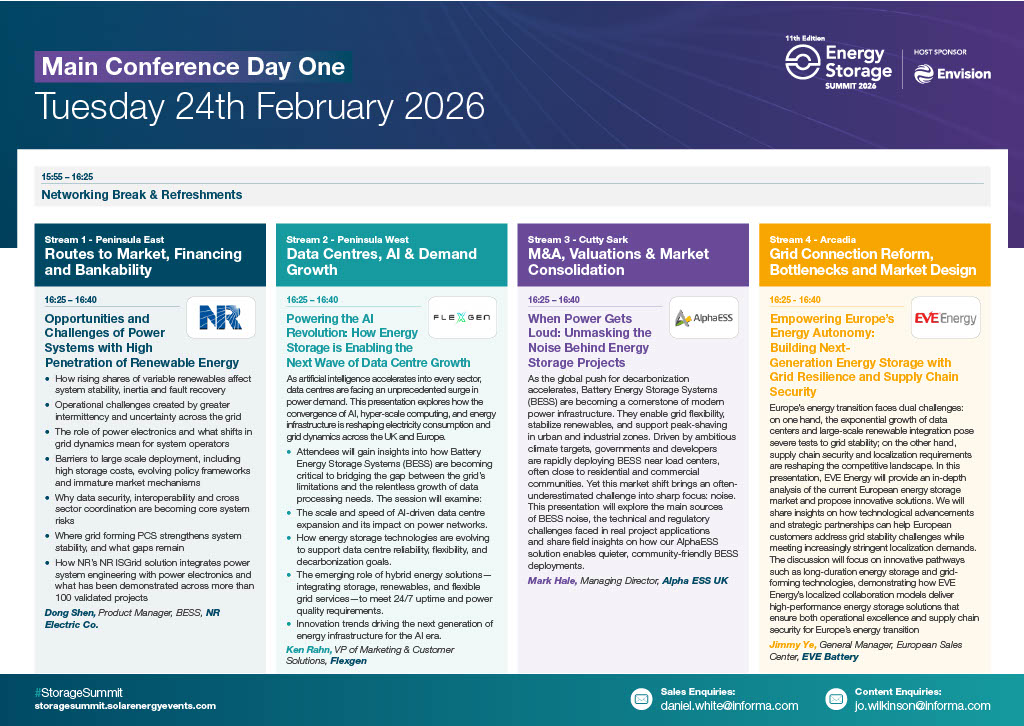
As the global push for decarbonization accelerates, Battery Energy Storage Systems (BESS) are becoming a cornerstone of modern power infrastructure. They enable grid flexibility, stabilize renewables, and support peak-shaving in urban and industrial zones. Driven by ambitious climate targets, governments and developers are rapidly deploying BESS near load centers, often close to residential and commercial communities. Yet this market shift brings an often underestimated challenge into sharp focus: noise. This presentation will explore the main sources of BESS noise, the technical and regulatory challenges faced in real project applications, and share field insights on how our AlphaESS solution enables quieter, community-friendly BESS deployments.


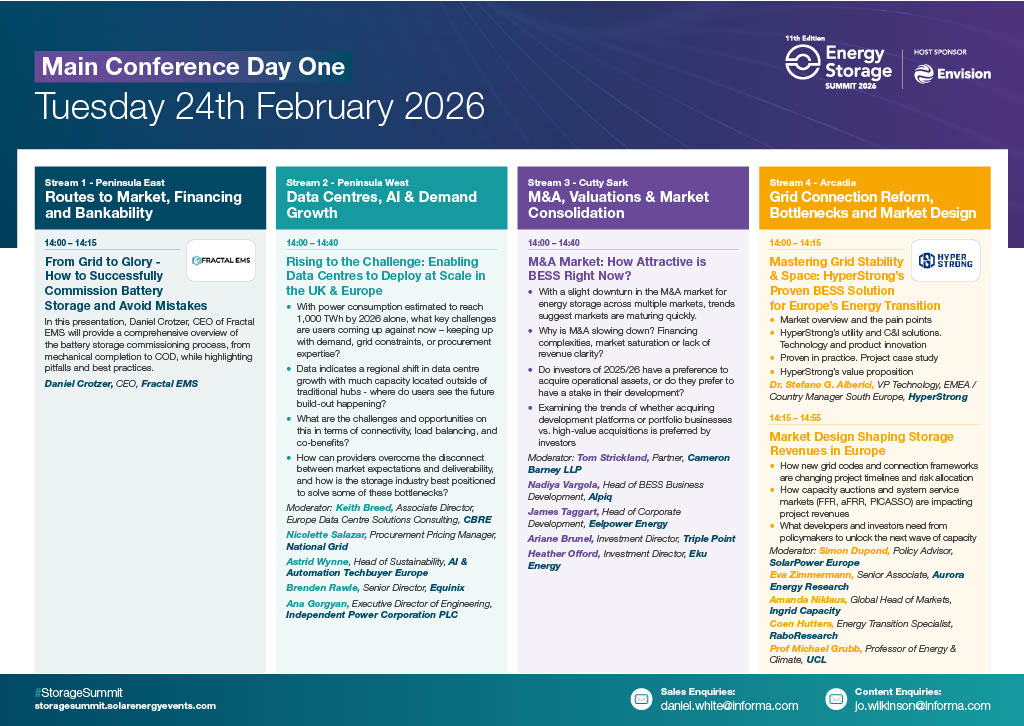
As artificial intelligence accelerates into every sector, data centres are facing an unprecedented surge in power demand. This presentation explores how the convergence of AI, hyperscale computing, and energy infrastructure is reshaping electricity consumption and grid dynamics across the UK and Europe.
Attendees will gain insights into how Battery Energy Storage Systems (BESS) are becoming critical to bridging the gap between the grid’s limitations and the relentless growth of data processing needs. The session will examine:
This session will outline the opportunities and challenges for developers, utilities, and investors at the crossroads of digital and energy transformation—and how storage can be the linchpin in powering the world’s growing digital intelligence sustainably.
![]()
In this presentation, Daniel Crotzer, CEO of Fractal EMS will provide a comprehensive overview of the battery storage commissioning process, from mechanical completion to COD, while highlighting pitfalls and best practices.
![]()
The energy storage M&A landscape is shifting as the sector matures and investment expectations change. This session explores how market conditions, revenue visibility and risk perception are influencing deal appetite and valuation trends.
Utility-scale storage projects face ongoing challenges related to site conditions, power density requirements and compliance with local regulations. This session examines how modular system design can address these constraints, improve project adaptability and support stronger lifecycle performance.

As Battery Energy Storage Systems (BESS) are adopted at an accelerating pace, the risk exposure landscape is evolving.
The rapid deployment of large-scale BESS projects is creating alternative risk profiles, with changing climate factors, fire hazards, and operational demands that create fresh challenges throughout the project lifecycle. Additionally, the surge in BESS adoption is driving increased production, which brings its own set of changing risks. In this presentation, Zurich Resilience Solutions examines how these dynamic factors are reshaping the risk exposure. We will share how we are adapting our advice to address the potential impacts on the resilience of BESS & the local grid network.

Europe’s energy transition faces dual challenges: on one hand, the exponential growth of data centers and large-scale renewable integration pose severe tests to grid stability; on the other hand, supply chain security and localization requirements are reshaping the competitive landscape. In this presentation, EVE Energy will provide an in-depth analysis of the current European energy storage market and propose innovative solutions. We will share insights on how technological advancements and strategic partnerships can help European customers address grid stability challenges while meeting increasingly stringent localization demands. The discussion will focus on innovative pathways such as long-duration energy storage and grid-forming technologies, demonstrating how EVE Energy’s localized collaboration models deliver high-performance energy storage solutions that ensure both operational excellence and supply chain security for Europe’s energy transition.
![]()

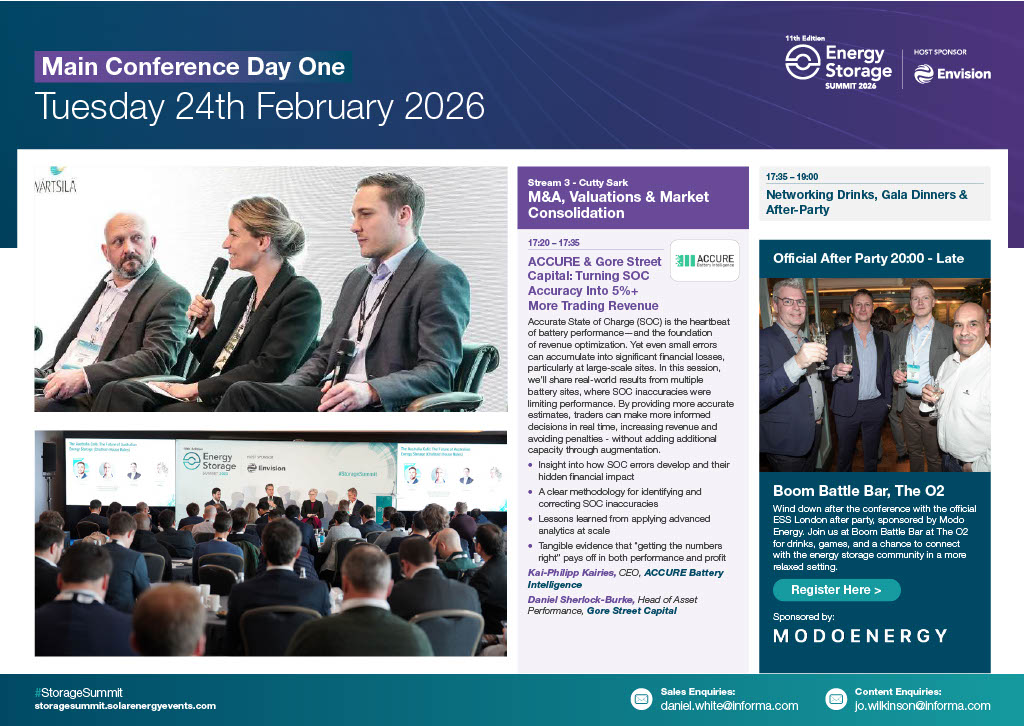
Accurate State of Charge (SOC) is the heartbeat of battery performance—and the foundation of revenue optimization. Yet, even small errors can accumulate into significant financial losses, particularly at large-scale sites.
In this session, we’ll share real-world results from multiple battery sites, where SOC inaccuracies were limiting performance. By providing more accurate estimates, traders can make more informed decisions in real time, increasing revenue and avoiding penalties – without adding additional capacity through augmentation.
Attendees will gain:
![]()


![]()
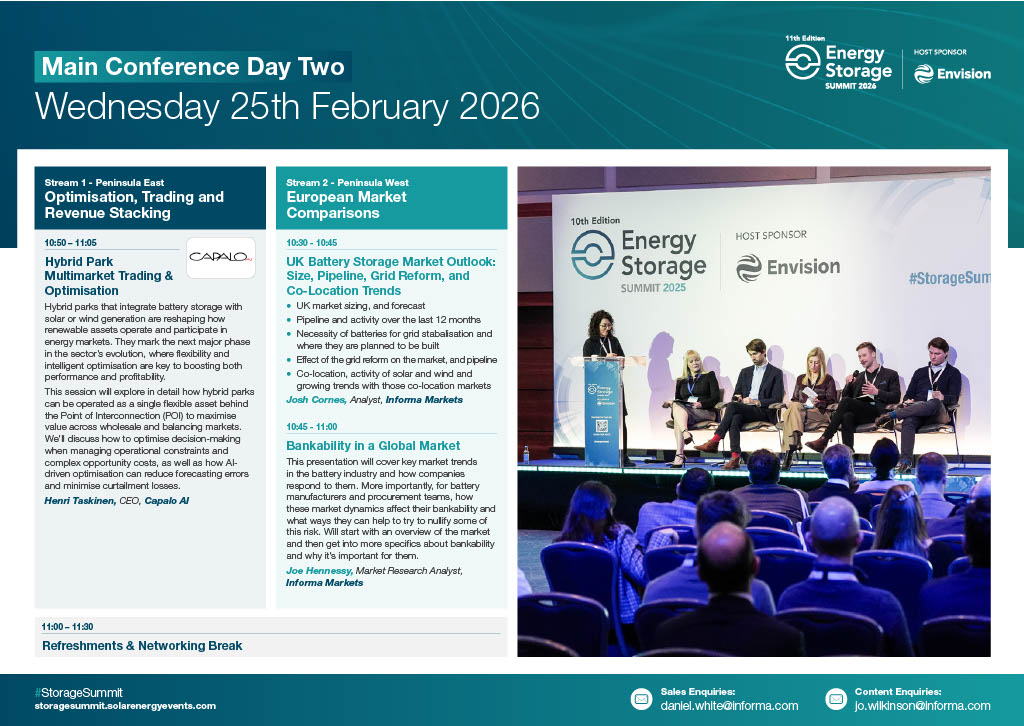
Hybrid parks that integrate battery storage with solar or wind generation are reshaping how renewable assets operate and participate in energy markets. They mark the next major phase in the sector’s evolution, where flexibility and intelligent optimisation are key to boosting both performance and profitability.
This session will explore in detail how hybrid parks can be operated as a single flexible asset behind the Point of Interconnection (POI) to maximise value across wholesale and balancing markets. We’ll discuss how to optimise decision-making when managing operational constraints and complex opportunity costs, as well as how AI-driven optimisation can reduce forecasting errors and minimise curtailment losses.


Trade actions and tariffs are reshaping battery and power equipment costs. What does this mean for project CAPEX, price volatility, and delivery risk in Europe during 2026 and beyond?
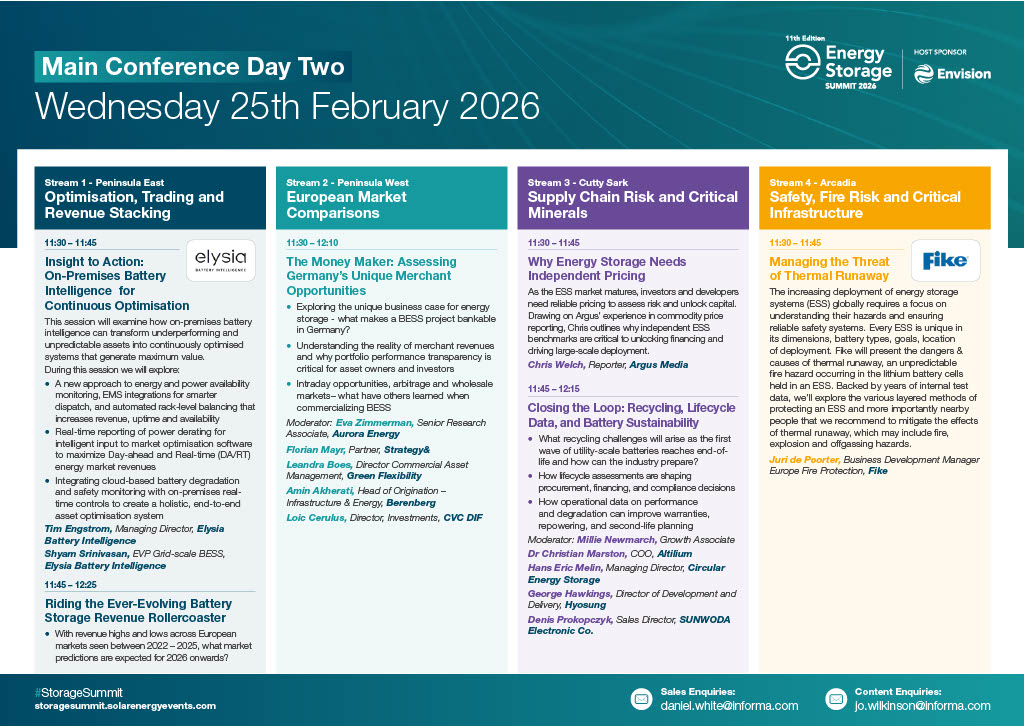
The increasing deployment of energy storage systems (ESS) globally requires a focus on understanding their hazards and ensuring reliable safety systems. Every ESS is unique in its dimensions, battery types, goals, location of deployment. Fike will present the dangers and causes of thermal runaway, an unpredictable fire hazard occurring in the lithium battery cells held in an ESS. Backed by years of internal test data, we’ll explore the various layered methods of protecting an ESS and, more importantly, nearby people that we recommend to mitigate the effects of thermal runaway, which may include fire, explosion and off-gassing hazards.

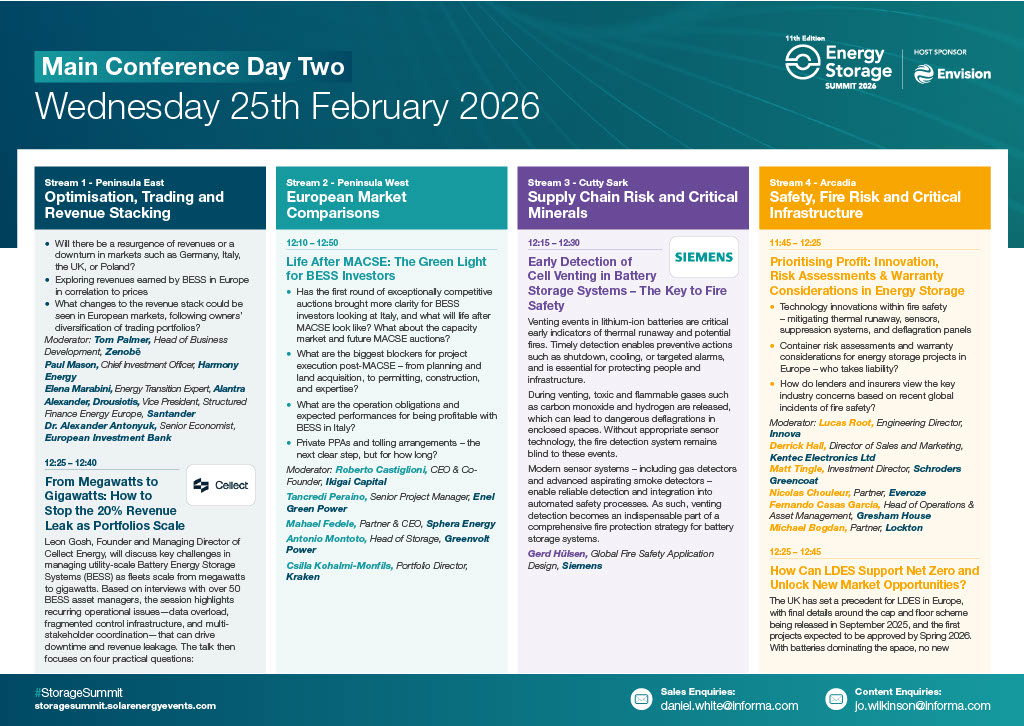
Venting events in lithium-ion batteries are critical early indicators of thermal runaway and potential fires. Timely detection enables preventive actions such as shutdown, cooling, or targeted alarms, and is essential for protecting people and infrastructure.
During venting, toxic and flammable gases such as carbon monoxide and hydrogen are released, which can lead to dangerous deflagrations in enclosed spaces. Without appropriate sensor technology, the fire detection system remains blind to these events.
Modern sensor systems – including gas detectors and advanced aspirating smoke detectors – enable reliable detection and integration into automated safety processes. As such, venting detection becomes an indispensable part of a comprehensive fire protection strategy for battery storage systems.
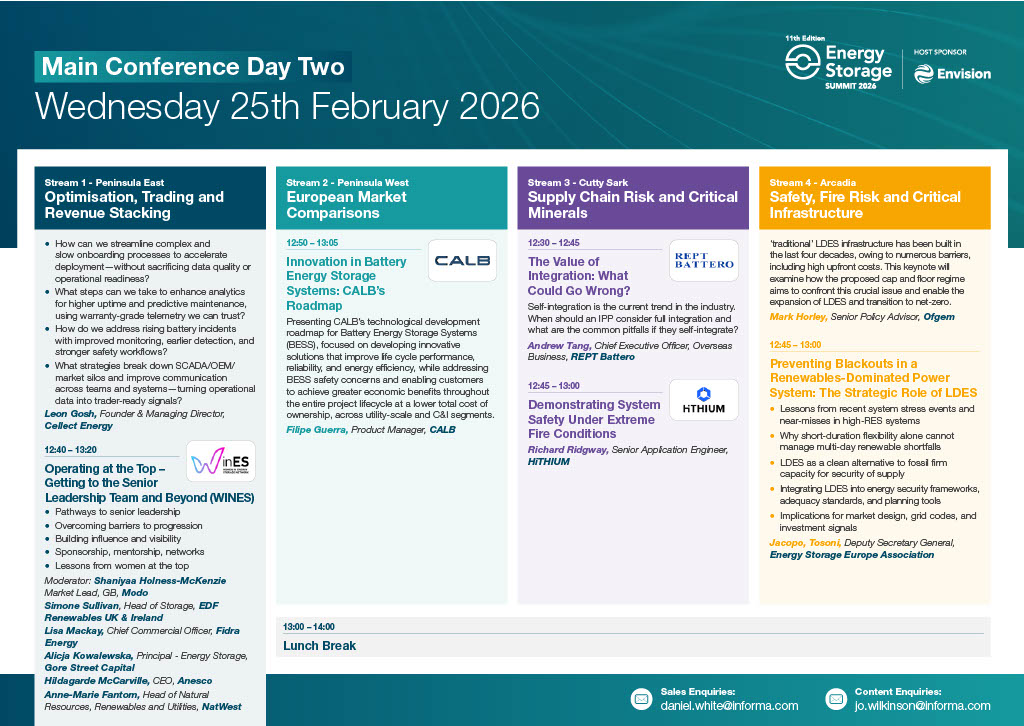
The UK has set a precedent for LDES in Europe, with final details around the cap and floor scheme being released in September 2025, and the first projects expected to be approved by Spring 2026. With batteries dominating the space, no new ‘traditional’ LDES infrastructure has been built in the last four decades, owing to numerous barriers, including high upfront costs. This keynote will examine how the proposed cap and floor regime aims to confront this crucial issue and enable the expansion of LDES and transition to net-zero.

![]()
![]()